
Gravity shaker tables · Designed and built in South Africa
Recover more concentrate from every ton you process.
TremiFlo separates gold, copper, tin, tungsten, chrome and other heavy minerals from lighter waste using water, motion and density alone. No mercury and no cyanide.
- 7countries supplied
- 2.2 × 1.2 mriffled deck
- 0.37 kWsingle-phase drive
- 4–6 weekslead time
- 12 monthswarranty
Chemical-free recovery
Gravity separation recovers free gold and other heavy minerals by density alone. There is no mercury or cyanide on site, and the concentrate goes cleanly to the smelter or the next process step.
Low power, simple to run
A 0.37 kW motor on an IP66-rated variable speed drive runs from a standard single-phase supply or a small generator, and a 220 L reservoir with its own pump supplies the wash water. Stroke length and speed are adjustable to suit the feed.
Scales with your plant
Start with a single table and add units as throughput grows. Banks of tables are configured to suit your site and plant layout.
The machine
Built in our factory located in the East Rand of Johannesburg
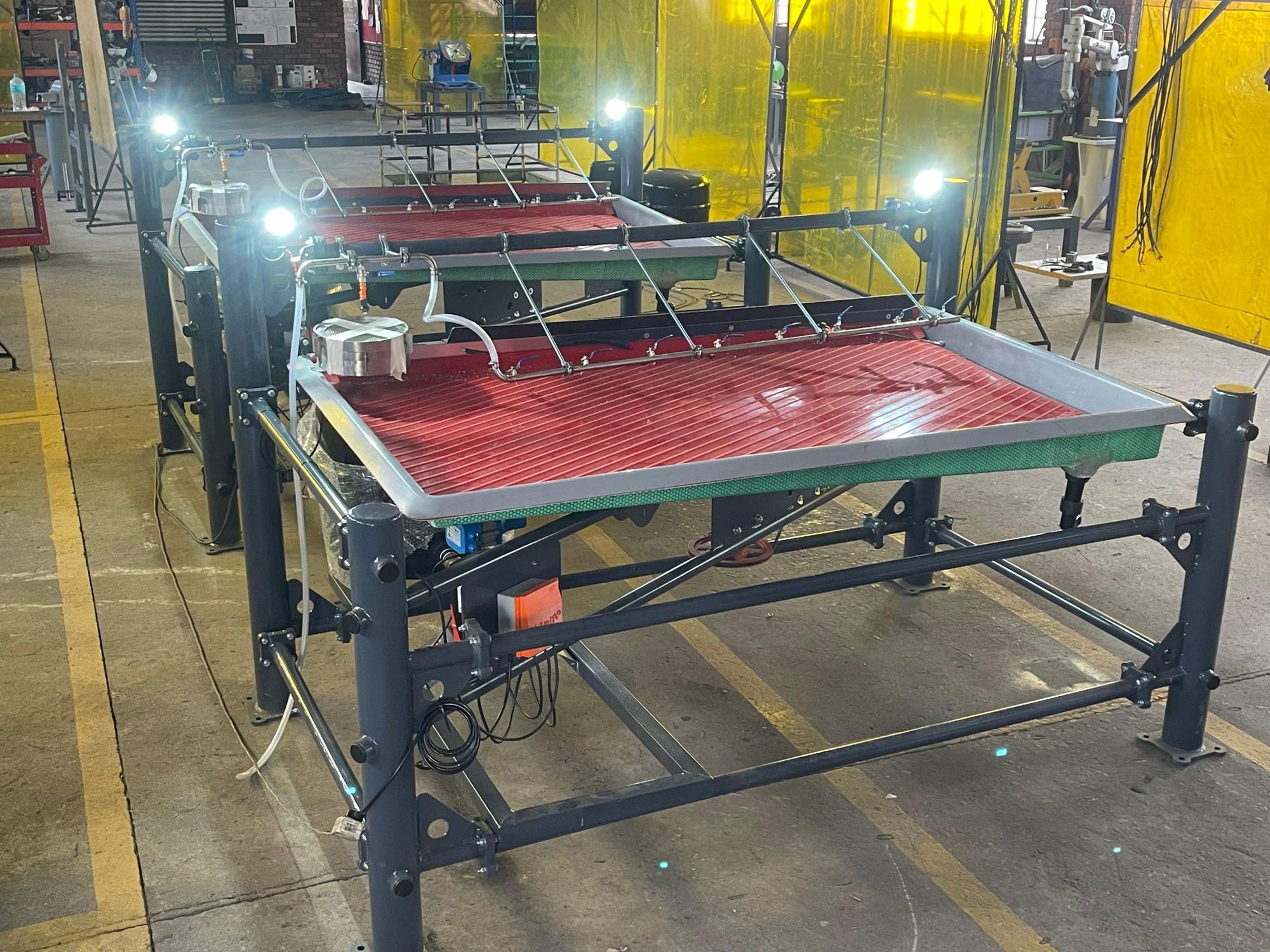
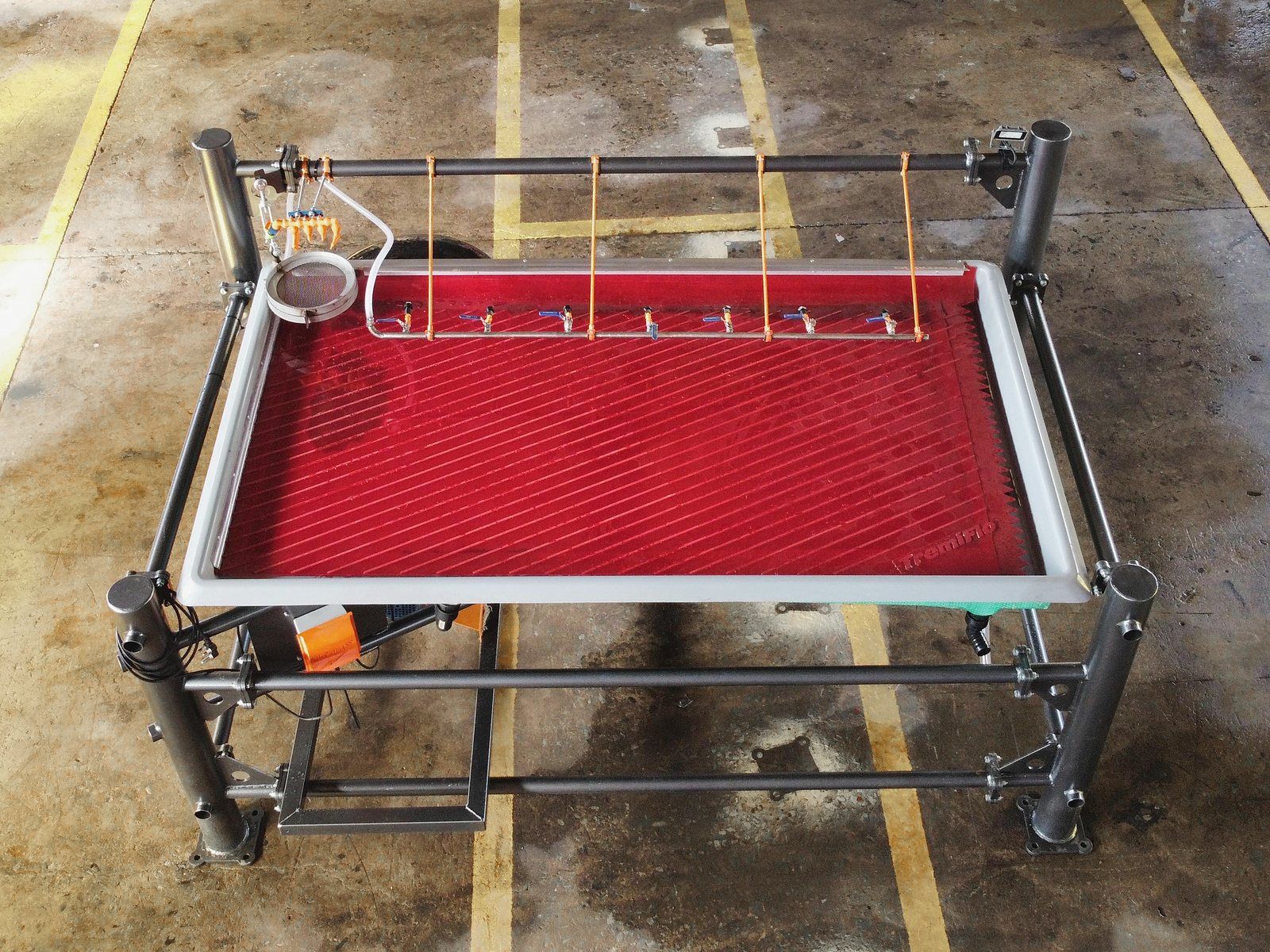
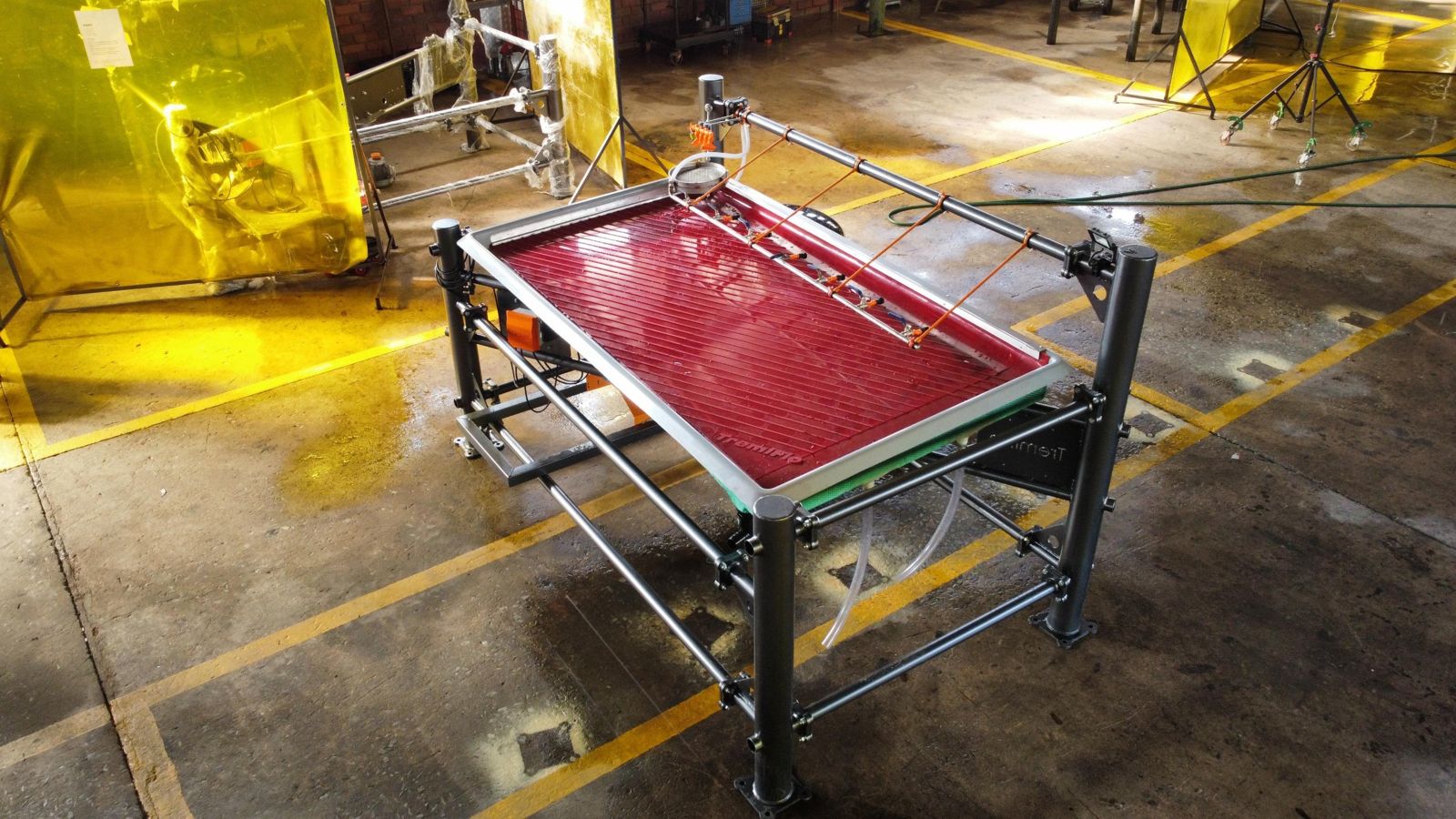
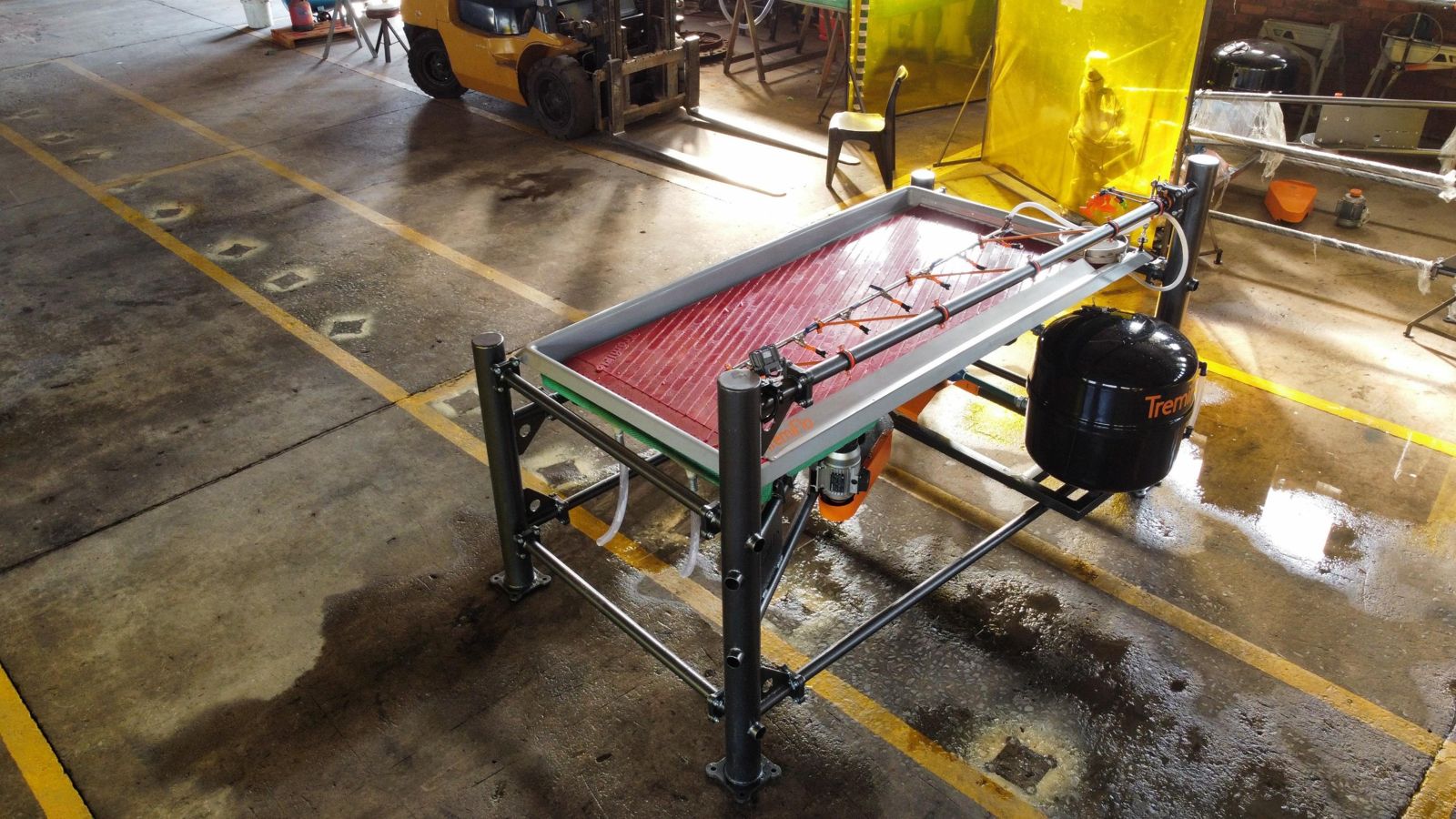
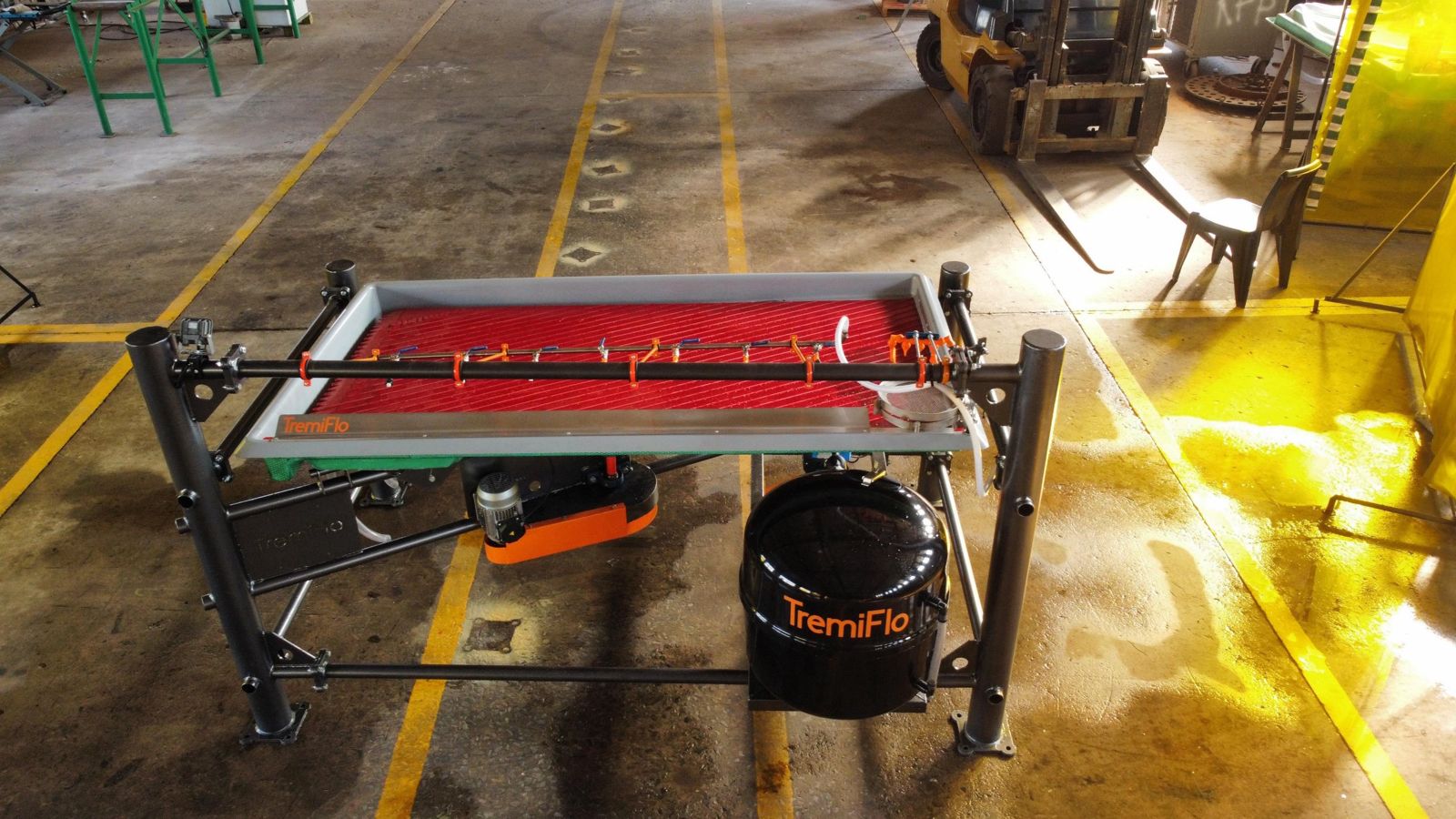
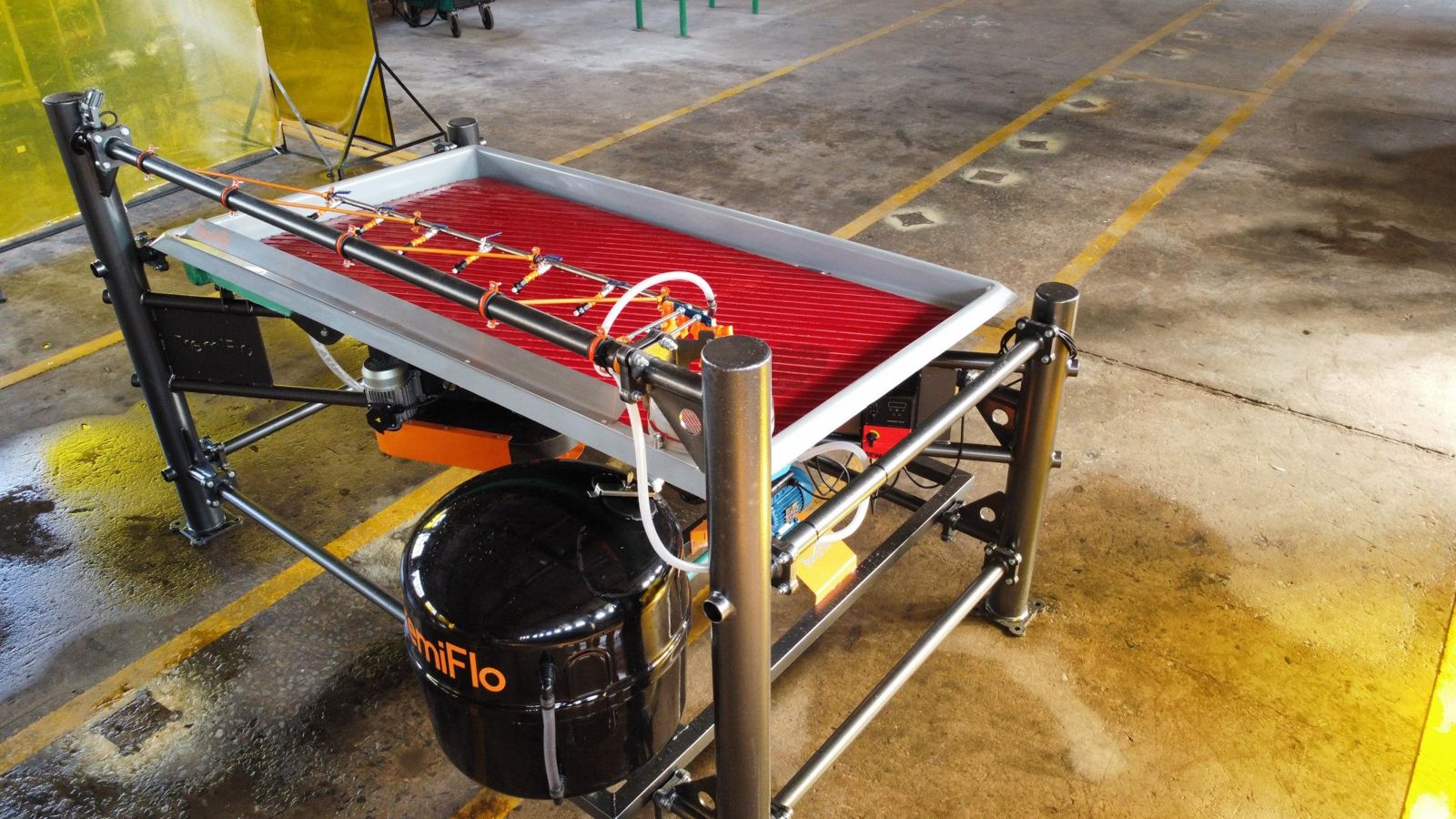
A bolted tubular frame, a two-stage riffled deck, a variable speed drive and a wash-water manifold that can be set tap by tap.
Walk-around video
Ready for dispatch
A full walk-around of a TremiFlo wrapped and ready to ship from our factory: the deck, drive unit, control box and 220 L water reservoir.
How it works
Gravity separation on a two-stage riffled deck
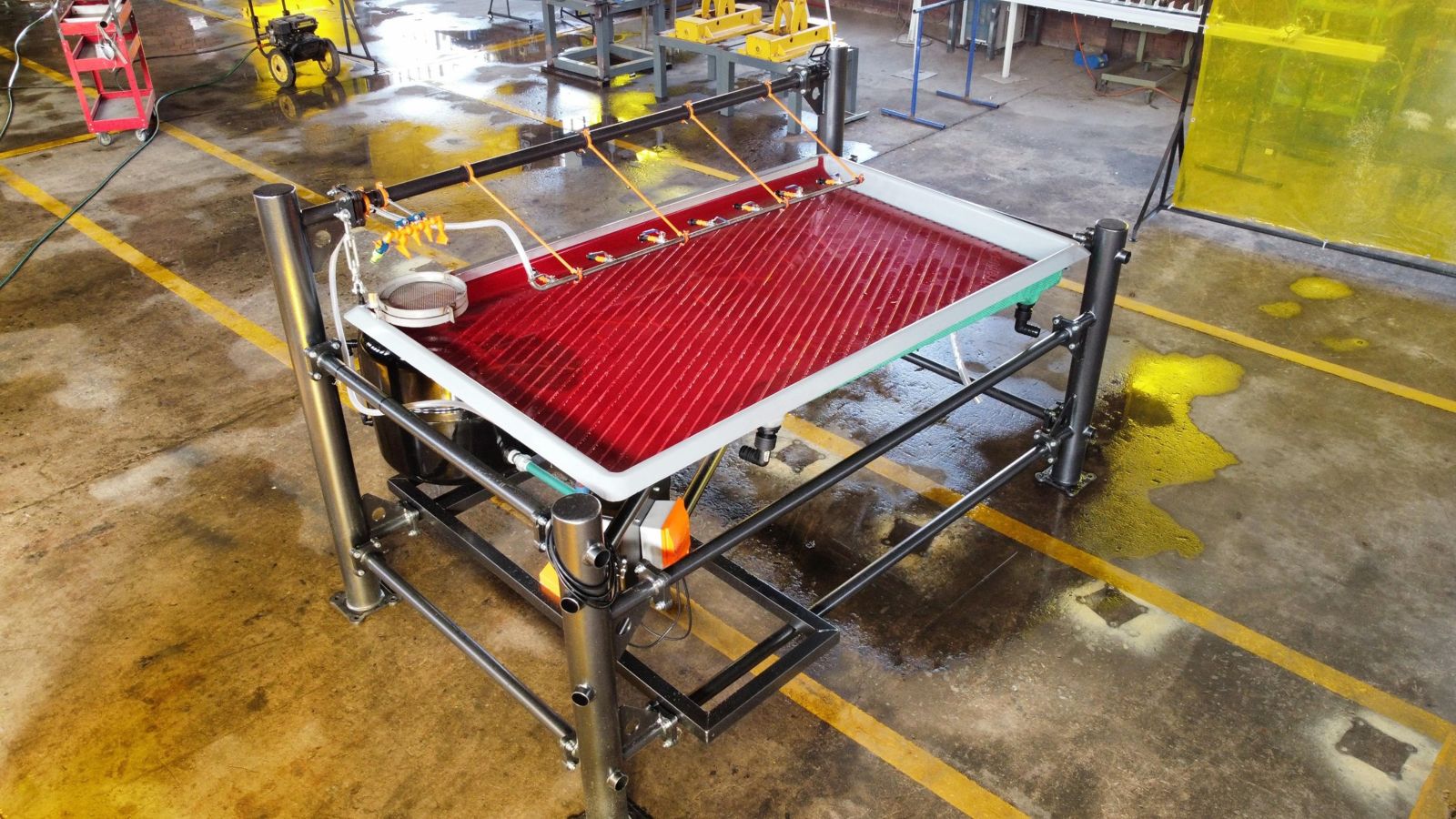
The deck strokes along its diagonal riffles while wash water flows across it. Heavy particles are held by the riffles and carried to the concentrate end. Lighter material is washed over them and off the deck as tailings.
On the deck
The real thing, running
Wash water from the individually valved nozzles flows across the riffles while the deck strokes. Each nozzle can be opened, closed or aimed to put water exactly where the separation needs it.
- FeedCrushed and sized material is mixed with water and fed through the sieve feed box onto the top corner of the deck.
- StrokeThe drive moves the deck forward slowly and returns it quickly. Heavy particles advance along the riffles with every stroke.
- WashWash water from the manifold flows across the deck, carrying light gangue over the riffles and off the long edge as tailings.
- SplitConcentrate, middlings and tailings discharge at separate points. Middlings can be returned to the feed for a second pass.
- Riffles
- Raised strips that trap heavy particles and guide them to the concentrate end. On the TremiFlo they run diagonally, in line with the stroke, in two stages: taller riffles in stage 1 hold the concentrate where the feed first meets the deck, and lower riffles in stage 2 carry it on to the concentrate end.
- Stroke length
- The distance the deck travels each cycle, set with the bumper. Longer strokes suit coarser feed.
- Stroke speed
- Strokes per minute, set on the variable speed drive. Finer feed generally runs faster with a shorter stroke.
- Wash water
- Cross-flow water that removes light material. Too much washes away fine heavies; too little lets light gangue report to the concentrate.
- Middlings
- Mixed particles between the concentrate and tailings bands, usually re-fed for a second pass.
Configurations
Single tables and multi-table banks
Every TremiFlo is manufactured to order, so each installation is built around your throughput and your site.
Single TremiFlo
One table on its own frame for pilot plants, small alluvial operations, upgrading concentrate from other circuits and laboratory test work.
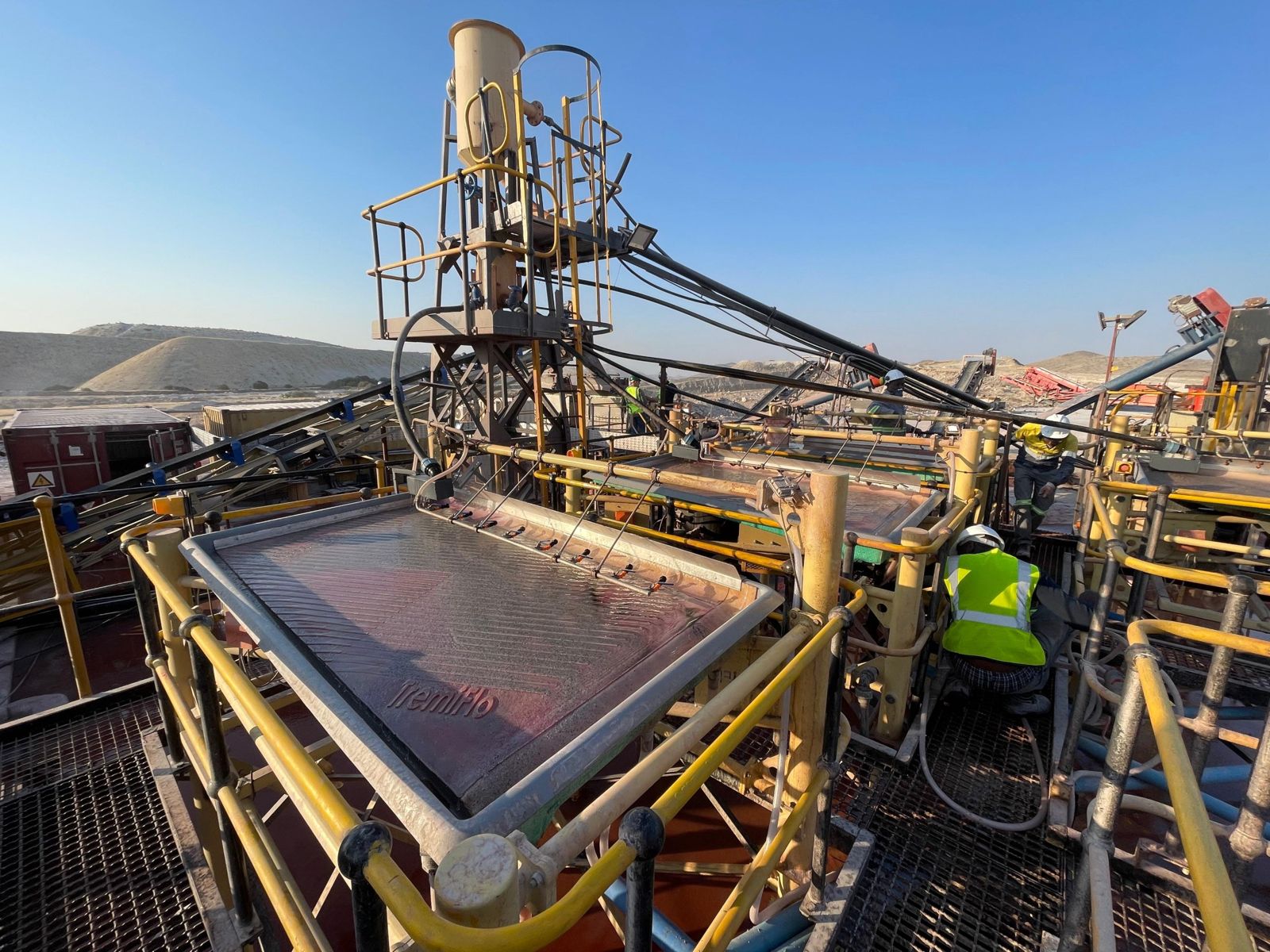
TremiFlo Banks
Multiple tables working together for higher throughput, arranged to suit the site: in line, back to back, or split between roughing and cleaning duties.
Specifications
Technical specifications
Throughput depends on the material and its particle size. Bring a sample to a demo run and we will set the table up on your material. All specifications are also in the product data sheet.
Machine per table
| Deck size | 2 200 × 1 200 mm2.64 m² working area |
|---|---|
| Deck | Lightweight deckSpecialised mining mat with two-stage diagonal riffles |
| Frame | Rugged steel frameSurrounds the deck so nobody can touch or lean on it while running |
| Footprint | approx. 4 m² |
| Mass | 250 kg |
| Drive | 0.37 kW, 3-phase motorRuns from single-phase supply through an IP66-rated VSD |
| Linkage | Single-point linkageDeck angle set by the holes in the linkage plate |
| Stroke | AdjustableSet with the bumper while the table runs |
| Water system | 220 L reservoirClean water pump and independently valved stainless steel manifold |
| Throughput | Material dependentThe finer the material, the slower the feed rate |
Installation and set-up from the TremiFlo guide
| Location | Under roofOut of direct sunlight on the mat, with good lighting around the table |
|---|---|
| Foundation | 180 mm reinforced concreteFrame fixed with 16 × M16 threaded bar, levelling nuts and chemical anchors |
| Levelling | Roller beam levelSet with the levelling nuts; rollers free-moving, not overtightened |
| Deck frequency | 43–48 Hz to startSet on the VSD, then fine-tuned with the bumper |
| Manifold position | 200–250 mmFrom deck wall to nozzle tip; nozzles aimed once material runs |
| Feed | Damp, consistent feedInto the sieve as soon as bare mat appears. Overfeeding packs the riffles and loses mineral |
Every material behaves differently, so final settings are tuned during your demo run or on commissioning. Full instructions are in the installation and operating guide, supplied with every table.
Projects
Supplied to operations across Africa
TremiFlo tables have been shipped to mining and processing operations in seven countries.
- South Africa
- Namibia
- Angola
- Zambia
- DRC
- Kenya
- Ghana
Delivery to new destinations is arranged per order. Contact us about your site.
Test work result
Copper by gravity concentration
Shaker table test work on copper ore, run on a closely sized fraction. The table produced a clean three-way split into concentrate, middlings and tailings.
- Material
- Copper ore
- Size fraction
- +150 µm to 500 µm
- Products
- Concentrate · middlings · tailings
- Test work
- Extrax Services
Running uniform size fractions improves separation, gives more consistent results and reduces losses, because particles of similar size separate on density alone.
Applications
Who TremiFlo is for
Operations recovering gold, copper, tin, chrome and other heavy minerals that need a reliable, chemical-free recovery step that local crews can run and maintain.
Scavenger, cleaner and concentrate upgrading duties alongside existing circuits at mid-tier operations.
Metallurgical laboratories and consultants running gravity amenability tests on new material.
Suitable minerals
Heavy minerals TremiFlo can recover
- 76OsOsmium22.6 g/cm³
- 78PtPlatinum21.4 g/cm³
- 79AuGold19.3 g/cm³
- 74WTungsten19.2 g/cm³
- 73TaTantalum16.7 g/cm³
- 45RhRhodium12.4 g/cm³
- 47AgSilver10.5 g/cm³
- 29CuCopper9.0 g/cm³
- 26FeIron7.9 g/cm³
- 50SnTin7.3 g/cm³
- 24CrChromium7.2 g/cm³
- 30ZnZinc7.1 g/cm³
- 51SbAntimony6.7 g/cm³
The bigger the density difference from the waste rock, the cleaner the separation. Recovery also depends on how the mineral occurs in your ore and its particle size. Not sure about your material? Book a demo run on your sample.
Support and training
Manufactured, supported and serviced in-house
Every TremiFlo is designed, manufactured and supported at our factory in the East Rand of Johannesburg.
- Free operator training at our East Rand facility for every TremiFlo customer.
- Demo runs on your own material. Bring a sample, watch it separate and see the concentrate before you buy.
- Direct technical support from the team that built your table, with spares manufactured in the same factory.
Downloads
Technical documents
The product data sheet for your purchase request, and the full guide to installing, setting up and running a TremiFlo.
PDF · 2 pages · A4
Product data sheet
Key features, technical specifications, configurations, commercial terms and contact details on two pages.
PDF · 9 pages · A4
Installation and operating guide
Safety, foundation and levelling, power connection, the spanner test, bumper and VSD tuning, feeding and suitable minerals.